
Rodents - Rats and Mice
Rodents such as rats and mice are common pests in homes and businesses throughout Sydney, the Central Coast and Newcastle. Buildings provide the ideal environment for rodent activity, offering reliable access to food, water, shelter and warmth - particularly during the cooler months when rodents are more likely to move indoors.
Once inside, rodents can quickly become a serious problem. They contaminate food and surfaces with droppings, urine and fur, and are capable of spreading disease directly and indirectly through parasites such as fleas and other organisms. In addition to health risks, their constant gnawing behaviour, necessary to control their continuously growing teeth, can cause significant damage to structures, furnishings and stored goods. Of particular concern is their tendency to gnaw on electrical wiring, which can lead to equipment failure and even fire hazards.
Rodent activity is often hidden, with infestations developing in roof voids, wall cavities, subfloors and storage areas. Without proper management, populations can increase rapidly, making early detection and professional intervention essential.
Surekill Pest Control provides effective professional rodent management solutions tailored to your property. We carry out thorough inspections to identify activity, locate entry points and assess contributing factors. From there, we implement a structured rodent management program, which may include the strategic placement of secure bait stations designed to minimise risks to pets and non-target animals.
Alongside treatment, we provide practical advice on proofing and sanitation to help reduce the likelihood of future infestations. With a combination of professional treatment and preventative measures, Surekill Pest Control can help protect your home or business from ongoing rodent problems.
Get Help with Rats and Mice
Rodent activity can create serious health, hygiene and property risks in homes and businesses. Surekill Pest Control provides professional rodent management tailored to the property, species involved and level of activity.
Our licensed and insured technicians can inspect for signs of rodent activity, identify likely harbourage and entry points, and implement appropriate management strategies.
Our services include:
-
Professional Rodent Management
-
Secure Baiting Systems
-
Trapping Where Appropriate
-
Rodent Monitoring
-
Proofing & Prevention Advice
-
Residential & Commercial Rodent Management
-
📞 Call Surekill on (02) 4341 5585

Rodent Information
Rodent - Overview
Rodents are a diverse group of mammals belonging to the order Rodentia, with many species found worldwide. In urban environments, however, the most significant pest species are rats and mice, which have adapted extremely well to living alongside humans in both domestic and commercial settings. As mammals, rodents are warm-blooded and covered in fur, and they are distinguished by their constantly growing, chisel-shaped front incisor teeth. The term "rodent" is derived from the Latin rodere, meaning "to gnaw", which reflects their natural and necessary behaviour of chewing to control tooth growth. This gnawing habit allows them to damage timber, insulation, wiring and stored goods, sometimes leading to structural issues and even fire risks. The main pest rodent species in Australia are the Norway rat (Rattus norvegicus), the roof rat (Rattus rattus) and the house mouse (Mus musculus). These rodents are highly adaptable and thrive in close association with humans, taking advantage of accessible food sources and shelter within roof voids, wall cavities, subfloors and storage areas. Rodents are highly successful pests due to their ability to exploit a wide range of food sources, reproduce rapidly, and avoid danger through well-developed senses and cautious behaviour. They are capable climbers, burrowers and swimmers, allowing them to access buildings through a variety of entry points and making infestations difficult to control once established. From both an economic and health perspective rodents present a serious concern. They consume and contaminate food supplies and surfaces with droppings, urine and hair, and are capable of transmitting diseases to humans through multiple pathways. their presence in homes, food premises and commercial buildings is therefore not only a nuisance but also a significant hygiene and safety risk. Rodents adaptability, intelligence and reproductive capacity, effective rodent management requires a thorough understanding of their biology, behaviour and habitat, supported by a structured and comprehensive control approach.
Rodent Identification
Rodent activity is often identified by the presence of physical signs rather than directly seeing the animals themselves. Rats and mice are generally nocturnal and tend to remain hidden within structures, making early detection reliant on recognising the indicators of their presence. One of the most common signs is droppings. Rat droppings are larger and more capsule-shaped, while mouse droppings are smaller and pointed at the ends. Fresh droppings are typically dark and moist, becoming dry and brittle over time. The location and quantity of droppings can help indicate the level of activity and areas of frequent movement. Gnawing damage is another key indicator. Rodents continually chew on materials such as timber, plastic, insulation and electrical wiring to maintain their teeth. This can result in visible damage around structures and, in some cases, create fire hazards when wiring is affected. Noises within roof voids, wall cavities or subfloors, particularly at night, are often an early sign of rodent activity. Scratching, scurrying or gnawing sounds may indicate movement between nesting and feeding areas. Rodents also leave smear or rub marks along walls, beams and entry points. These marks are caused by the oils and dirt on their fur as they repeatedly travel the same routes. Tracks or footprints may be visible in dusty areas, and burrows may be present outdoors near foundations, garden beds or pathways. Although sightings are less common, rats are typically larger with longer bodies and tails, while mice are smaller with finer features. Regardless of the species, any of these signs should be taken seriously, as rodent populations can establish and expand quickly if left unmanaged.
Rodent Biology and Development
Rats and mice are mammals with a high reproductive capacity, which contributes significantly to their success as pests. Under favourable conditions, where food, water and shelter are readily available, rodent populations can increase rapidly and become difficult to control. Rodents are social animals that live in groups and breed throughout the year when conditions are suitable. They construct nests using soft materials such as paper, fabric and insulation, providing protection for their young. These nests may be located both indoors and outdoors, depending on environmental conditions and resource availability. Outdoors, nesting commonly occurs in burrows near waterways, under buildings, in vegetation or within rubbish and storage areas. Indoors nests are typically found in wall voids, roof voids, subfloors and even within stored goods. As omnivorous mammals, rats and mice require a consistent food source to sustain growth and reproduction. Their ability to consume a wide variety of foods allows them to thrive in many environments, particularly in close association with human activity. The survival and development of rodent populations are closely linked to environmental conditions. When food supplies increase or shelter becomes available, breeding activity may intensify. Conversely, changes in food availability can influence movement and population distribution, often driving rodents into buildings in search of more reliable resources.
Rodent Behaviours and Habitat
Rodents are highly adaptable, agile animals that are primarily nocturnal, although they may become active during the day when populations are high, food is limited, or disturbance is minimal. They tend to move cautiously within their environment, preferring to travel along walls, edges and under cover rather than across open spaces. This behaviour reflects their strong reliance on their sense of touch, particularly through whiskers and body hairs. Rats are creatures of habit and will repeatedly use the same travel routes between nesting and feeding sites. They are often described as neophobic, meaning they are wary of new objects or changes in their environment. This can result in initial avoidance of new bait stations or traps. In contrast, mice are more curious and exploratory, often investigating new food sources quickly and feeding at multiple locations rather than a single site. Both rats and mice are capable climbers and can scale rough surfaces, pipes, trees and vines, as well as travel along cables and narrow structures. Rats, particularly Norway rats, are also strong swimmers and can access buildings via drains and sewer systems. Rodents have well-developed senses, with the exception of relatively poor eyesight. Their senses of smell, taste, hearing and touch are highly acute, allowing them to detect changes in their environment, locate food and avoid danger. Grooming is a common behaviour, during which rodents clean their fur and feet, and they also continually gnaw on materials to maintain their teeth. Rodents inhabit a wide range of environments where food and shelter are accessible, including roof voids, wall cavities, subfloors, storage areas, vegetation and waste sites. Natural predators such as cats, dogs, snakes and birds may contribute to some level of population control, but are rarely sufficient to manage infestations in urban environments.
Why Rodents Become a Problem
Rodents can become a significant problem in both residential and commercial environments due to their ability to contaminate food and surfaces, damage property and potentially transmit disease. Where food, water and shelter are readily available, populations can establish quickly and may become difficult to manage without intervention. A major concern is the consumption and contamination of food. Rats and mice will feed on a wide variety of stored products, but the greater issue is the contamination they cause. As they move through food storage and preparation areas, they deposit droppings, often dozens per day, along with urine and hair. This contamination can render large quantities of food unsafe for consumption, leading to waste, financial loss and potential regulatory issues in commercial settings. In some cases, rodents may also attack and consume other food sources such as poultry. Rodents also cause considerable physical damage through their constant gnawing behaviour. Because their teeth grow continuously, they must chew on materials such as timber, plastic, insulation, packaging and soft metals. This can result in damage to doors, skirting boards, stored goods and equipment. Of particular concern is their tendency to gnaw on electrical wiring and cables, which can lead to equipment failure, short-circuiting and increased fire risk. Nesting behaviour can further contribute to hazards, as rodents may collect materials or debris in concealed areas. From a health perspective, rodents pose a serious risk due to their ability to transmit disease to humans. Contamination of food, utensils, and surfaces with urine and faeces can spread harmful bacteria such as Salmonella, contributing to food poisoning and other gastrointestinal illnesses. Disease transmission may also occur through direct contact with contaminated surfaces, through bites, or indirectly via parasites such as fleas. Historically, rodents have been responsible for the spread of major diseases as plague and while such outbreaks are now rare, rodents still play a role in the transmission of various infections. Overall, the combination of food contamination, property damage, and health risks makes most rodents a serious pest. Even low levels of activity should be addressed promptly, as early intervention is far more effective than attempting to control a well-established infestation.
Prevention & Risk Management
Effective rodent management usually requires a combination of methods rather than relying on a single treatment. A thorough inspection can help identify the rodent species involved, areas of activity, harbourage, travel routes, food and water sources and potential entry points. Long-term management may combine professional treatment, monitoring, trapping, sanitation and rodent proofing according to the circumstances of the property. PROFESSIONAL PEST MANAGEMENT Professional rodent management begins with a thorough inspection to determine the species involved, extent of activity and areas where rodents are feeding, travelling, nesting or entering the building. Signs such as droppings, gnaw marks, rub marks, tracks, burrows and nesting material can help technicians identify areas of activity and determine appropriate management strategies. Depending on the property and level of activity, professional management may include secure baiting systems, trapping, monitoring and other appropriate rodent-management methods. Placement and treatment methods are selected according to rodent behaviour, areas of activity, building conditions and potential risks to people, pets and non-target animals. Rats can be cautious of new objects and may initially avoid newly installed bait stations or traps, while mice tend to be more curious and may investigate new objects more readily. Understanding these behavioural differences can influence the placement and monitoring of rodent-management systems. Ongoing inspection and monitoring may be required, particularly in commercial properties or where conditions continue to provide rodents with food, water, shelter or access to the building. PREVENTION & NON-CHEMICAL RISK MANAGEMENT Reducing access to food, water and shelter is an important part of preventing and managing rodent activity. Food should be stored securely, rubbish bins kept closed and food spills and waste cleaned promptly. Rubbish, stored materials and excessive vegetation around buildings should also be managed where they provide potential harbourage. Rodent proofing can provide an important long-term means of reducing entry into buildings. Gaps, cracks, openings and other potential entry points should be identified and, where practical, sealed using durable rodent-resistant materials. Particular attention may be required around doors, service penetrations, roof areas, vents and other points where rodents may gain access. Vegetation and other access routes around buildings can also be managed where they allow rodents to reach roofs or other entry points. Trapping may be appropriate as a non-chemical management method in some situations, particularly where the use of rodenticides is unsuitable or where the recovery of rodents is important. Good sanitation, proofing and ongoing monitoring can significantly reduce the conditions that support rodent populations and help reduce the risk of re-infestation.
Signs of Rat or Mouse Activity
Recognising signs of rodent activity is a critical first step in effective control. Rodents are often nocturnal and cautious, so their presence may not always be obvious. A thorough inspection, combined with careful observation of signs and consultation with building occupants, can reveal the extent of an infestation and guide control measures. Common signs of rodent activity include: Burrows: Rats may dig burrows near waterways, under buildings or in vegetation. Freshly used burrows often have clean, open entrances, while inactive ones may be blocked with debris or cobwebs. Droppings: Fresh droppings are dark, shiny and pliable, indicating recent activity. Older droppings dry out, harden and may be attacked by insects. Monitoring droppings over time helps to confirm ongoing rodent presence. Food Disappearing: Rodents frequently carry food to their nests, causing noticeable losses. Footprints: Tail marks, paw prints and impressions in dust or soft soil confirm recent activity. Gnaw marks: Rodents gnaw on wood, soft metals, cables, food containers and other materials to keep their teeth worn down. Fresh gnaw marks indicate current activity. Nests: Rodents build nests from paper, fabric, straw and other soft materials. Nests containing fresh droppings or nearby stored food often indicate an active population. Odour: A persistent, musty odour may indicate a long-standing infestation. Paths and runs: Outdoor rodent traffic can pat down vegetation to create noticeable paths. Indoors, dust-free paths in otherwise dusty areas often reveal regular movement. Pets: Dogs and cats may react to rodent odours or sounds, often alerting occupants to activity. Rub marks: Greasy marks along walls, skirting boards or pipes result from constant contact with rodent fur. These runways indicate regular movement paths and are useful for placing traps and bait stations. Sounds: Scratching, gnawing, squeaking or movement noises, especially at night, are a strong indicator of activity. Urine stains: Rodent urine may fluoresce under ultraviolet light. Long-term mouse activity can build small mounds of urine, dust and debris called urinating pillars. Visual sightings: Daytime sightings often suggest a large population or a shortage of food. By combining these clues with careful observation and inspection, it is possible to accurately locate rodents, assess the size of the population and plan an effective management strategy.
Key Pest Rodent Species in Our Region
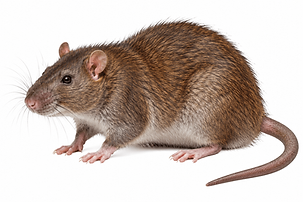
Norway Rat - Rattus Norvegicus
The Norway rat, also commonly known as the brown rat, sewer rat or water rat, is the largest and most widespread pest rodent in Australia. It is considered one of the most economically significant rodent pests due to its adaptability, high reproductive rate and ability to thrive in a wide range of environments. Norway rats have a heavy-set body, a blunt snout, small close-set ears and a tail that is shorter than the length of their head and body combined. Their fur is typically coarse and red-brown in colour. These physical characteristics help distinguish them from other pest rodents, particularly the more slender roof rat. This species has a high reproductive capacity, with females capable of producing five to six litters per year, each consisting of approximately eight to ten young. With a gestation period of around 22 days and sexual maturity reached within three to four months, populations can increase rapidly when conditions are favourable. Norway rats are highly adaptable and are commonly found in a variety of environments, including warehouses, factories, food premises, poultry farms, garbage areas, sewers and residential properties. Outdoors, they typically live in burrows located along waterways, under buildings or beneath rubbish and vegetation. These burrows often include concealed "bolt holes" that allow for quick escape. Indoors, they may nest in wall voids, roof spaces and other sheltered areas with access to food and water. They are omnivorous feeders and will consume a wide range of foods, including meat, cereals, garbage and stored products. Unlike some other rodents, Norway rats require regular access to water which influences where they establish harbourage and feeding sites. In terms of behaviour, Norway rats are creatures of habit and tend to follow consistent travel routes once established. They are also neophobic, meaning they are cautious of new objects in their environment. this can result in delayed interaction with bait stations or traps. when competing with other rodent species, Norway rats often become dominant and may displace them from the area. Due to their size, burrowing behaviour and preference for lower levels of building and surrounding environments, Norway rats are commonly associated with ground-level infestations and sewer-related activity.

Roof Rat - Rattus Rattus
The roof rat, also known as the black rat or ship rat, is smaller and more slender than the Norway rat and is commonly associated with indoor infestations, particularly in roof spaces and elevated areas of buildings. It is well adapted to urban environments and is frequently found in residential and commercial structures, as well as around ports and coastal areas. Roof rats have a slender body, a pointed snout, large prominent ears and a tail that is longer than the length of their head and body combined. Their fur is typically fine and may vary in colour from grey to black or brown, often with a lighter underside. These features, along with their smaller size, help distinguish them from the heavier Norway rat. This species has a strong reproductive capacity, producing four to five litters per year with approximately six to eight young per litter. With a gestation period of around 23 days and sexual maturity reached within three to four months, populations can establish and grow quickly under favourable conditions. Roof rats are excellent climbers and are most commonly found in elevated areas such as roof voids, wall cavities, ceilings and upper levels of buildings. They are capable of travelling along cables, pipes and vegetation, allowing them to move between structures with ease. Unlike Norway rats, they rarely burrow and are poor swimmers, so they are less commonly associated with sewers or ground-level infestations. Outdoors, roof rats may nest in trees, vines and dense vegetation, while indoors they seek sheltered, undisturbed areas with access to food. Although they are considered omnivorous, they tend to favour fruits, vegetables and cereal grains. When feeding on foods with high moisture content, their need for free water is reduced. In areas where roof rats and Norway rats occupy the same territory, the larger and more dominant Norway rat will often displace the roof rat. As a result, roof rat infestations are more commonly associated with higher locations within structures and less competitive environments. Due to their climbing ability and preference for elevated nesting sites, roof rats are often responsible for activity in ceilings and upper levels of buildings, making early detection and targeted control essential.

House Mouse - Mus Musculus
The house mouse is the smallest of the common pest rodents and is widely found in both residential and commercial environments. Although sometimes referred to as a "field mouse," particularly when found outdoors, it is the same species that frequently infests buildings. House mice have a slender body, a pointed snout, relatively large ears and a tail that is approximately the same length as their head and body. Their fur is typically fine, ranging from brown to grey, with lighter colouring on the underside. Mice found indoors are often darker in colour, while those living outdoors may appear lighter or sandy. This species has an extremely high reproductive potential. Females may produce between six and ten litters per year, with around five to six young per litter. With a short gestation period of approximately 19 days and sexual maturity reached in as little as six weeks, mouse populations can increase very rapidly under favourable conditions. House mice are highly adaptable and may live both indoors and outdoors. They can enter buildings through very small openings, making them particularly difficult to exclude. Indoors, they may nest in wall voids, cupboards, roof spaces, stored goods, furniture and other concealed areas. Outdoors, they commonly burrow in soil or shelter in vegetation and debris. In terms of behaviour, mice are more curious and exploratory than rats, often investigating new objects and food sources quickly. They are capable climbers, jumpers and swimmers, although they are less reliant on water than rats. Their feeding habits differ in that they prefer to nibble small amounts of food at multiple locations rather than feeding in one place. House mice are omnivorous but tend to favour cereal grains and dry foods. They can survive with very little free water, often obtaining sufficient moisture from their food. While they do not consume large quantities of food, they cause significant damage through contamination with droppings and urine, as well as through gnawing and food spoilage. In some rural and agricultural areas, favourable conditions such as abundant food and mild weather can lead to rapid population increases, sometimes resulting in large-scale mouse plagues. These outbreaks can cause extensive damage to crops, stored products and buildings. Due to their small size, rapid breeding and ability to exploit a wide range of nesting sites, house mice can establish infestations quickly, making early detection and control essential.
Anatomy of Rodents

Other Common Pests We Treat
Homes and businesses can sometimes experience more than one pest problem at a time. In addition to rodent management, Surekill Pest Control provides professional pest management for ants, spiders, cockroaches, bed bugs and termites throughout the Central Coast, Sydney and Newcastle regions.