
Birds
Birds are an important part of Australia's natural environment, but when they begin nesting or roosting on homes, commercial buildings, warehouses, or industrial sites, they can quickly become a significant pest. Accumulations of droppings, nesting materials, noise, and the spread of bacteria, fungi, and parasites can create health risks, damage property, contaminate food, and increase maintenance costs.
At Surekill Pest Control, we provide professional bird control services throughout the Central Coast, Sydney, and Newcastle. Our experienced technicians manage a range of pest bird species, including feral pigeons, Indian mynas, European starlings, spotted turtle doves, silver gulls, Australian white ibis, sulphur-crested cockatoos, and welcome swallows. Every property is different, so we assess the bird activity, identify the species involved, and recommend the most appropriate management strategy.
Effective bird management focuses on long-term prevention rather than simply removing birds. Using an Integrated Pest Management (IPM) approach, we combine exclusion systems, physical deterrents, habitat modification, and environmentally responsible control methods to reduce bird activity while complying with Australian wildlife regulations. Our goal is to provide safe, humane, and effective solutions that protect your home or business from ongoing bird problems.
Whether birds are nesting in your roof, roosting on ledges, contaminating food storage areas, or damaging commercial premises, Surekill can provide tailored bird management solutions to help prevent future infestations and protect your property.
Protect Your Property from Pest Birds
Surekill Pest control can provide professional bird management solutions to protect your home or business. We identify the bird species, locate nesting and roosting sites, and recommend effective, long-term solutions to reduce bird acuity and prevent ongoing problems.
Free Bird Management & Proofing Quote
Safe, Professional and Effective
Our bird management services includes:
-
Bird proofing and exclusion solutions
-
Bird spikes, netting and deterrent systems
-
Removal of nesting and roosting problems
-
Bird management for homes, commercial buildings, warehouses and industrial facilities
-
Humane, long-term bird control solutions
📞 Call Surekill on (02) 4341 5585

Bird Information
Bird - Overview
Bird populations throughout Australia have adapted extremely well to urban and suburban environments, resulting in a steady increase in pest-related issues across both residential and commercial properties. Common pest birds such as pigeons, Indian mynas, sparrows, and starlings are frequently found in areas where food, water, and shelter are readily available, including homes, warehouses, shopping centres, marinas, and agricultural facilities. While birds are a natural part of the environment, certain species can become problematic when they establish nesting and roosting sites on buildings and structures. Their presence can lead to a range of issues, including the accumulation of droppings, contamination of surfaces, unpleasant odours, noise disturbances, and the spread of bacteria and parasites. Over time, this can result in damage to property, blocked gutters and drains, and increased maintenance costs. Managing bird activity can be complex, as many species are intelligent, highly mobile, and protected under Australian wildlife regulations. This means that effective control must be carefully planned and carried out using appropriate, compliant methods. Pest management professionals are often required to assess the extent of the problem and implement tailored solutions suited to the specific site and species involved. Successful bird control relies on an integrated pest management (IPM) approach. This involves combining physical deterrents, exclusion systems, and environmental modifications to reduce the factors attracting birds to the area. By limiting access to food sources, water, and nesting sites, and implementing long-term preventative measures, bird activity can be significantly reduced and future infestations minimised.
Bird Identification
Pest birds commonly encountered around homes and businesses on the Central Coast, Sydney, and Newcastle include pigeons, Indian mynas, sparrows, and starlings. While these species vary in size and appearance, they share similar behaviours that make them well suited to urban environments. Pigeons are typically medium-sized birds with grey feathers, iridescent neck colouring, and distinctive cooing calls. They are often seen roosting on rooftops, ledges, and signage. Indian mynas are brown birds with black heads and bright yellow beaks and eye patches, known for their aggressive behaviour and tendency to nest in roof voids and cavities. Sparrows and starlings are smaller birds that commonly nest in groups, often gaining access to buildings through small gaps and openings. In pest control, identification is not only based on the bird itself but also on the signs they leave behind. Bird droppings are one of the most obvious indicators and are typically white and acidic, often accumulating beneath roosting or nesting areas. Nesting materials such as twigs, feathers, and debris may be found in gutters, roof voids, or ledges. Feathers, food scraps, and noise—particularly early in the morning or at dusk—are also common signs of bird activity. Structurally, birds are lightweight animals with wings adapted for flight, allowing them to easily access elevated areas that are difficult to reach. Their claws enable them to grip onto ledges, wires, and roofing materials, while their beaks are used for feeding, nesting, and manipulating materials. These physical characteristics allow birds to exploit a wide range of structures, making them a persistent pest when suitable conditions are present. Accurate identification of the bird species and their activity is essential in determining the most effective control method, as different birds may require different management approaches.
Bird Biology and Development
Birds reproduce by laying eggs, with most pest species capable of breeding multiple times throughout the year when conditions are favourable. In urban environments where food and shelter are readily available, breeding cycles can occur more frequently, leading to rapid population growth. The life cycle begins when birds establish a nesting site, often in sheltered locations such as roof voids, gutters, wall cavities, ledges, or signage. Nests are typically constructed from twigs, feathers, and other available materials. Once established, these nesting sites are often reused and expanded over time. After mating, the female lays a clutch of eggs, which are incubated by one or both parents depending on the species. Incubation periods are generally short, often around two to three weeks. Once hatched, the chicks are dependent on the parents for food and protection. During this stage, adult birds frequently travel between feeding areas and the nest, increasing visible activity around the property. Young birds grow rapidly and will leave the nest within a few weeks. However, they may remain nearby and continue to rely on the parents for a short period before becoming fully independent. In favourable conditions, multiple broods can be raised in a single year, significantly increasing bird numbers in a short time. Because of their ability to breed quickly and reuse nesting sites, bird populations can establish and expand rapidly if left unmanaged. This is why early intervention and ongoing prevention are important in reducing long-term bird problems.
Bird Behaviours and Habitat
Pest birds are highly adaptable and often select habitats that provide food, shelter, and safe nesting areas. Many species, including pigeons, starlings, sparrows, swallows, and Indian mynas, frequently roost or nest in buildings, gaining access through broken tiles, damaged ridge capping, or other small openings. Nesting is often seasonal, coinciding with egg-laying periods, but birds may reuse sites year after year if conditions remain favourable. Commercial properties such as warehouses, factories, and grain storage facilities are particularly vulnerable. Birds are attracted to large open doors, grain stores, and food-handling areas, where they can find food, shelter, and nesting opportunities. Open grassed areas, such as aerodromes, also attract birds, which can become a hazard to aircraft due to flocking behaviour. Birds’ physical behaviour contributes to property damage and health risks. Droppings are acidic and can deface buildings, corrode metal, and create slippery surfaces on concrete pathways. Nesting in gutters and downpipes can cause blockages, leading to water overflow, moisture issues in walls, and potential structural damage during heavy rainfall. Additionally, birds can carry external parasites such as lice and mites, which may infest buildings after the young leave the nest. The birds’ habits of roosting and defecating in high-traffic areas increase the spread of spores from fungus diseases such as histoplasmosis, cryptococcosis, and aspergillosis, as well as bacteria such as Salmonella. Certain species, particularly pigeons, starlings, and Indian mynas, are responsible for the majority of these risks.
Why Bird Become a Problem
Birds become pests primarily when their natural behaviours conflict with human environments. They are drawn to areas with abundant food, water, and nesting opportunities, often leading to: Health Risks Droppings can carry harmful bacteria, fungi, and parasites, which may cause illness in humans, particularly in vulnerable populations. Property Damage Acidic droppings, nesting materials, and accumulated weight in gutters or on ledges can deface buildings, damage roofing and guttering, and create slip hazards. Economic Impact Birds in food production and storage facilities can contaminate food, spoil produce, and cause significant financial losses. Safety Hazards Birds at aerodromes pose a threat to aircraft, especially jet engines, while aggressive species such as Indian mynas can displace native birds, affecting local biodiversity. Community Concern The displacement of native species and the visible mess caused by droppings and nests can lead to complaints and reputational issues for businesses and homeowners. Understanding both the behaviour of pest birds and the problems they cause is essential for planning effective control strategies. Integrated management that addresses both habitat modification and safe deterrent measures can reduce bird activity and minimise long-term issues.
Prevention and Management - Professional Treatment Options
Professional pest control companies use a variety of effective tools to manage bird activity while complying with wildlife protection regulations. These methods are focused on exclusion, population management, and, when necessary, controlled removal. Physical deterrents and exclusion systems are the most common professional methods: Bird Spikes Stainless steel rods on ledges, beams, and window sills prevent pigeons from landing. Durable and long-lasting, these are ideal for larger pest birds. Electric Bird Shock Systems Less visible than spikes, suitable for all pest bird sizes, and preferred for heritage buildings and high-visibility structures. Ledge Modification Systems Post-and-wire systems, stainless steel coils, and angled surfaces prevent birds from gaining a foothold. Bird Netting Fine, tensioned nets are used to seal roof spaces, courtyards, or open structural areas, preventing birds from entering without affecting natural light. Population Management Techniques may also be applied in specific situations: Trapping Cage traps can capture birds humanely, but require regular attention. Trapped exotic species may need to be euthanised in accordance with local regulations. Poisoning Used only as a last resort and under strict legal supervision. Targeted baits, such as alpha-chloralose or distress poisons, are species-specific and carefully applied to prevent secondary poisoning of non-target wildlife. Shooting Occasionally used for population reduction in remote or low-risk areas, though rarely applied in urban settings due to safety and legal concerns. Additional deterrents include taste aversion treatments, such as aluminium sulphate, which make surfaces or food unpalatable to grazing birds like ducks or geese. All professional methods are implemented with consideration for public perception, safety, and animal welfare, ensuring humane and effective results.
Prevention and Management - Environment & Non-Chemical Control
Preventing bird problems through environmental management and non-chemical methods is often the safest and most effective long-term approach. These methods aim to reduce access to food, water, and shelter, making your property less attractive to pest birds: Habitat Modification Seal gaps in roofs, walls, and vents to prevent nesting; remove ledges or surfaces that encourage roosting. Food Source Management Secure bins, cover fruit trees with fine netting, and remove spilled grain or feed. In agricultural or horticultural areas, large netting can protect crops from damage. Aerodrome and Open Area Management Drain standing water, remove seeding grasses, and limit food availability to reduce bird congregation near aircraft and public spaces. Visual and Auditory Deterrents Moving predator decoys, rotating reflective devices, flashing lights, or distress call systems can temporarily scare birds from high-risk areas. Birds may habituate over time, so devices must be rotated or combined with other strategies. Repellents While gels are largely out of favour due to animal welfare and maintenance concerns, taste deterrents can be effective in turf and grazing areas. Non-chemical control measures are designed to work in conjunction with professional interventions, creating an integrated pest management strategy. By combining habitat modification, exclusion systems, and careful monitoring, long-term bird problems can be minimised without relying solely on lethal methods.
Key Pest Bird Species in Our Region
Common Introduced Pest Birds
These species are not native to Australia and are commonly associated with urban pest problems. They often compete with native wildlife, contaminate food and buildings, and readily adapt to living around people.
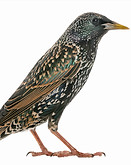
European Starling
Normally found - European Starlings are normally found in suburbs and towns. They can be in large flocks. Food - they feed on grains and insects Origin - Introduced Appearance - they are dark brown to black with a green sheen. They are 20 cm long. Nesting Habits - they will nest in a roof or cavities Number of Eggs - lay 6 pale eggs twice a year

Indian Myna
Normally found - Indian Myna birds are normally found in city areas and suburbs. Food - they feed on insects and food left on ground Origin - Introduced Appearance - they are abrown and white with yellow beak and legs. They are 25 cm long. Nesting Habits - they like to use twigs to make a nest and locate them in warehouses, ceilings and on roof girders which are the main support beams for a structure or building Number of Eggs - lay 4-5 glossy pale blue eggs in spring and summer

Pigeon
Normally found - pigeons are very domesticated and live in locations where there are lots of people during the day like schools, office buildings, parks ect. Food - eat anything that humans leave on the ground and in bins Origin - Introduced Appearance - various tones of grey and some green on neck. They are 30 cm long. Nesting Habits - nest are made from twigs and they build them in or on buildings and warehouses. Prefer it when they get access into the building to set up their next e.g. in ceiling and on beams Number of Eggs - 1to 2 eggs at a time several times a year

Spotted Turtle Dove
Normally found - Spotted Turtle Doves are usually found where there are seeds growing and plant beds. e.g. farms Food - they like vegetable matter and seeds Origin - Introduced Appearance - they have grey and brown spots on their neck, with a grey head, tones of brown down their back. They are 30 cm long. Nesting Habits - they will build nests in small trees and shrubs Number of Eggs - lay
Common Native Pest Birds
These species are protected under Australian wildlife legislation but can still cause problems when they nest or forage around homes, businesses, agricultural properties, and public spaces. Management generally focuses on exclusion, deterrence, and habitat modification rather than population reduction.

Sea Gull - Silver Gull
Normally found - sea gulls congregate at small airfields, garbage disposal bins. Wet weather will bring flocks in from the sea. Food - they eat anything that drops and flocks will annoy people with their screeching and surrounding presence until they hand over their meal. Very good scavengers. Origin - Native Appearance - they are a white with light grew wings and red legs. They are 30 cm long. Nesting Habits - their nest in shalow holes in the ground lined with grass. Number of Eggs - lay 3 to 4 eggs with brown markings

Australian White Ibis
Normally found - Australian White Ibis live in parks, gardens, zoos, and waste management areas. Flocks of many thousands come to an area. Food - they are the biggest scavengers, not fussy on what they eat. Origin - Native (protected) Appearance - they have a white body with a black tail feathers, neck, head, long beak and legs. They are 65 to 75 cms long. Nesting Habits - nest are made of sticks and twigs that they build in palm trees and other large trees Number of Eggs - lay 3 to 4 white eggs a year

Swallow
Normally found - swallows live together in large numbers. Mainly found in commercial and rural areas. They roost and nest together in farm buildings, under bridges, in warehouse and other structures. They can be problems in residential areas. Food - they eat insects, berries and seeds Origin - Native (protected) Appearance - they are brown, red and orange face and throat. Their belly is a light grey with a blue coat and the tail feathers are grey. They are 12 cm long. Nesting Habits - they create a nest made of mud to walls close to or touching the ceiling. Number of Eggs - lay 4 to 5 white to cream eggs with brown speckles

Sulphur Crested Cockatoo
Normally found - Sulphur Crested Cockatoo live mainly in agricultural and horticultural areas. They will knaw on timber and soft materials. They knaw on any building that they choose. Cockatoos are an intellegent bird but a major pest problem in society. Food - they eat seeds, fruit, nuts, roots, berries, blossoms, insects, larva, crops and bagged grain. Origin - Native (protected) Appearance - they are a large bird measuring 45 to 50 cm long. They have a yellow curved crest with a large grey beak. Nesting Habits - their nest is a natural hollow found in a tree. Number of Eggs - lay 1to 3 white speckled eggs twice a year.
Anatomy of a Bird

Other Common Pests We Treat
Homes and Businesses can sometimes experience more than one pest problem at a time. In addition to bird control, Surekill Pest Control also provides professional treatments for ants, spiders, rodents, bed bugs and termites throughout the Central Coast, Sydney and Newcastle regions.