
Fleas
Fleas are a common pest problem in homes and commercial properties across the Central Coast, Sydney and Newcastle, particularly where pets are present. These small parasitic insects can quickly establish themselves in carpets, furniture, bedding and outdoor areas, leading to ongoing irritation for both people and animals.
Flea infestations are often difficult to manage once established due to their rapid life cycle and ability to survive in a range of indoor and outdoor environments. Even a small number of fleas can develop into a larger infestation if conditions are suitable, especially in warm and humid weather.
Effective flea management requires a combination of professional pest management and good environmental management to target the different stages of the flea life cycle. When properly addressed, infestations can be brought under control and the risk of re-infestation significantly reduced.
Surekill Pest Control provides flea treatment services across the Central Coast, Sydney and Newcastle, helping to manage infestations in residential, rental and commercial properties.
Professional Flea Control Solutions
Flea infestations can be difficult to manage because different life stages may be present throughout the property, including carpets, furniture, pet resting areas, subfloors and outdoor environments.
Surekill Pest Control can assess the extent of flea activity and provide appropriate pest management based on the conditions within the property.
Our services include:
Flea Treatment
Residential Pest Management
Commercial Pest Management
Advice on Flea Prevention & Re-infestation Risk
📞 Call Surekill on (02) 4341 5585
Flea Information
Flea - Overview
Fleas are small parasitic insects that survive by feeding on the blood of animals and sometimes humans. While there are thousands of flea species worldwide, only a small number are commonly found in Australia, usually affecting pets such as dogs and cats. Fleas are well known for their irritating bites and can quickly become a major problem when conditions allow populations to grow. Infestations may develop inside carpets, bedding, furniture and outdoor pet areas, making control difficult without proper treatment. Understanding the flea life cycle is important for effective flea control and prevention. Professional treatment can help eliminate fleas and reduce the chance of re-infestation in homes and surrounding environments.
Flea Identification
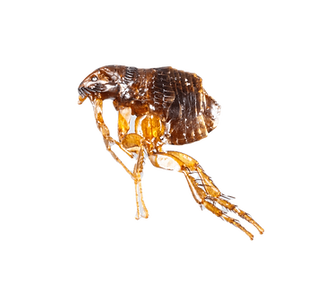
Adult fleas are small parasitic insects measuring approximately 1.5-4 mm long. They are usually reddish-brown in colour with flattened bodies that allow them to move easily through animal fur, hair and fabrics. Fleas do not have wings, but their powerful hind legs allow them to jump large distances relative to their size. Their bodies are hard and durable, helping them survive and remain attached to hosts such as dogs, cats and other animals. Fleas are equipped with piercing and sucking mouthparts used for feeding on blood. Some flea species also have small rows of spines near the head and body which assist with identification. Signs of flea activity may include pets scratching excessively, flea bites on humans, dark flea droppings in pet bedding or carpets, and fleas jumping onto people or animals. Identifying fleas correctly helps ensure effective treatment and long-term control.
Flea Biology and Development
Fleas undergo a complete metamorphosis consisting of four stages: egg, larva, pupa and adult. The adult female flea typically lays 4-8 eggs after each blood meal and may produce several hundred eggs over her lifetime. These eggs are usually laid on the host animal but quickly fall off into the surrounding environment, spreading into areas the host frequently visits, particularly bedding, carpets, furniture and outdoor resting sites. Eggs generally hatch within 2-14 days depending on environmental conditions. The emerging larvae do not feed on blood; instead, they survive on organic debris such as skin flakes, food particles and other matter found in carpets, foor cracks, soil and pet bedding. They may also consume dried adult flea faeces, which contains partially digested blood and serves as an important food source during development. After a larval feeding period that can last around 15 days or significantly longer in unfavourable conditions, the larva spins a protective silken cocoon. This cocoon attracts dust and debris, providing camouflage and protection while the insect pupates. The pupal stage typically lasts about seven days but can remain dormant for many months if conditions are not suitable for emergence. The complete flea life cycle can be as short as eighteen days or extend beyond a year depending on temperature, humidity and host availability. Adult fleas may live for several months and are capable of surviving long periods without feeding, making infestations persistent and difficult to eliminate without targeted treatment.
Flea Behaviours and Habitat
Fleas prefer warm, humid conditions and are most commonly encountered during the warmer months. High humidity supports larval development, allowing flea populations to build up both indoors and outdoors. Outdoor breeding sites are often found in sandy or loose soils, particularly in shaded or sheltered areas where moisture is retained. Under favourable conditions, flea larvae can become widespread in these environments. Flea development is strongly influenced by environmental conditions, and growth can slow or temporarily pause during unfavourable periods until conditions improve. The pupal stage is particularly resilient, with fleas capable of remaining dormant for extended periods before emerging as adults. Emergence is often triggered by vibrations, which signal the presence of a potential host. These vibrations are typically caused by movement from humans or animals, which also indicates a likely food source. Once a suitable host is nearby, adult fleas emerge rapidly and seek a blood meal. In vacant buildings, this can result in sudden and noticeable flea activity when the premises are reoccupied. Fleas locate hosts using cues such as body heat, carbon dioxide and odours associated with animals. Once on a host, adult fleas remain for extended periods to feed and reproduce, although they are not permanently attached and will move between hosts or the surrounding environment when necessary.
Why Fleas Become a Problem
Fleas become a significant pest primarily due to their biting behaviour. Their piercing and sucking mouthparts allow them to feed on blood, which can cause irritation ranging from mild discomfort to severe skin reactions. In some cases, flea bites can also contribute to the transmission of disease organisms. Fleas are not only a household nuisance but can also become a problem in commercial and industrial environments such as offices and factories. Infestations are sometimes misidentified as other skin irritations, including reactions attributed to mites or lice, when fleas are actually the cause. In domestic settings, flea bites commonly appear around the ankles and lower legs. The severity of irritation varies between individuals, with some people experiencing strong and persistent reactions lasting several days. This reaction is caused by saliva injected during feeding, which contains anticoagulant properties. Bites often occur in clusters and may present as small red marks with minimal swelling. In Australian conditions, it is often the repeated frequency of biting rather than the severity of individual bites that leads to significant concern and treatment. Fleas are also important from a public health perspective due to their role in disease transmission. Historically, fleas have been associated with serious diseases such as bubonic plague, caused by Yersinia pestis, which is transmitted between rodent hosts via flea vectors. Another disease, murine typhus, caused by Rickettsia typhi, can also be spread through contaminated flea faeces entering bite wounds. In addition, fleas may contribute to the transmission of certain intestinal tapeworms, including Dipylidium caninum and Hymenolepis diminuta, occasionally affecting both animals and humans.
Prevention & Risk Management
Prevention & Risk Management Successful flea management requires attention to both the property and the animals that may be carrying fleas. Because eggs, larvae, pupae and adults can occur in different locations, managing only the adult fleas that are visible may not address the entire infestation. A coordinated approach involving professional pest management, environmental cleaning and appropriate flea management for pets can help interrupt the flea life cycle and reduce the risk of continued activity. PROFESSIONAL PEST MANAGEMENT Professional flea management begins by assessing the extent of flea activity and identifying the areas where different flea life stages are likely to be developing. Particular attention may be given to carpets, rugs, floor edges and cracks, upholstered furniture, pet resting and sleeping areas, subfloors and suitable outdoor environments. Depending on the location, level of activity and conditions within the property, professional treatment may include appropriate applications to areas where fleas and their developing stages are likely to occur. Treatment methods and products are selected according to the circumstances of the infestation and the areas requiring treatment. Where pets are involved, flea management for the animal is also important. Surekill does not treat pets directly. Pet treatment should be undertaken by the owner using an appropriate registered veterinary product or following advice from a veterinarian or other suitably qualified animal-care professional. Coordinating treatment of the property with appropriate flea management for pets can help reduce the likelihood of fleas being reintroduced into treated areas. PREVENTION & NON-CHEMICAL RISK MANAGEMENT Environmental management plays an important role in reducing flea activity and supporting professional treatment. Regularly vacuum carpets, rugs and upholstered furniture, paying particular attention to carpet edges, beneath furniture and areas where pets regularly rest or sleep. Pet bedding should also be cleaned regularly. Outdoor and subfloor areas should not be overlooked. Warm, sheltered areas can provide suitable conditions for flea development, particularly where pets or other animals regularly spend time. Where practical, animal access to suitable flea-development areas may be restricted, and rodent activity around buildings should also be addressed where it may contribute to flea problems. Regular flea management for pets should be maintained using appropriate products and veterinary advice where required. Ongoing cleaning, pet management and attention to areas where fleas can develop can help reduce the likelihood of re-infestation following professional treatment.
Key Pest Fleas Species in the Region
Flea infestations may involve different species depending on the environment and the animals present. Several flea species are recognised as pests in Australia, although management of an infestation generally focuses on the extent of flea activity, the hosts involved and the areas where fleas are developing rather than species identification alone.

Cat Flea (Ctenocephalides felis)
The cat flea is most common pest flea found in Australia. Despite its name, it is not limited to cats and readily infests dogs, rats, wildlife and humans. It is the primary flea species responsible for household infestations in residential areas across the Central Coast, Sydney and Newcastle.

Dog Flea (Ctenocephalides canis)
The dog flea is very similar in appearance to the cat flea and is often difficult to distinguish without magnification. It is less commonly encountered in Australia, but can still infest dogs and other mammals in suitable conditions, particularly where untreated pets are present.

Human Flea (Pulex irritans)
The human flea is now less commonly associated with humans due to improved hygiene and modern cleaning practices. However, it can still be found in some environments and may infest pigs, dogs, rats and mice. It is occasionally associated with rural properties and piggeries.

Oriental Rat Flea (Xenopsylla cheopis)
The oriental rat flea is primarily associated with rats and is historically significant as a vector of diseases such as bubonic plague and murine typhus. while rare in modern urban homes, it may still be present in environments with rodent activity.
Life Cycle of a Flea

Other Common Pests We Treat
Homes and businesses can sometimes experience more than one pest problem at a time. In addition to flea management, Surekill Pest Control provides professional pest management for ants, spiders, rodents, bed bugs and termites throughout the Central Coast, Sydney and Newcastle regions.