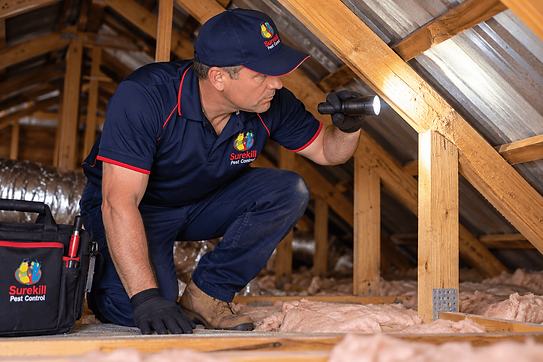
What to Expect During a Termite Prevention Treatment
Termite prevention is designed to reduce the risk of termites gaining concealed access to your home or business. The most appropriate termite management system will depend on the construction of the building, existing termite protection, access around the property and the level of termite risk.
Before recommending a termite prevention system, Surekill Pest Control will assess the property and discuss the options considered suitable. Depending on the building and circumstances, termite prevention may involve a chemical soil treatment, reticulation system, termite monitoring and baiting system, physical termite management components, or a combination of methods.
Termite prevention is not a one-time solution. Regular termite inspections and the ongoing inspection, servicing or maintenance of the termite management system remain important parts of protecting the property from future termite attack.
01
Termite Prevention Assessment
Choosing the Right Termite Prevention
There is no single termite prevention treatment suitable for every property. The most appropriate option will depend on the construction of the building, existing termite protection, access to treatment areas and the level of termite risk.
Surekill will assess the property and recommend the termite prevention option, or combination of options, considered suitable for the building.
Chemical Soil Treatments
A chemical soil treatment creates a treated zone in the soil around relevant areas of the building to help prevent concealed termite entry.
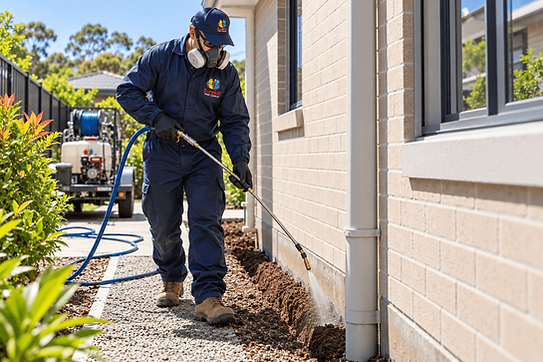
Depending on the construction, installation may involve trenching and treating exposed soil around the foundations. Where concrete, paving or other surfaces prevent access to the soil, drilling and injection may be required to treat the soil beneath these areas.
Reticulation Systems
A reticulation system uses specially designed pipework to distribute termiticide through designated soil areas around or beneath the building.
Where an existing reticulation system is installed and suitable for continued use, it may be replenished when required. The system and its installation will need to be assessed before determining the appropriate treatment.
Termite Monitoring and Baiting Systems
Termite monitoring and baiting systems provide another option for ongoing termite prevention and management. Stations are strategically positioned around the property and regularly inspected and serviced for termite activity.
Surekill uses systems such as Sentricon Always Active and Exterra where appropriate.
Because these systems require ongoing monitoring and servicing, we will explain the process in greater detail on our separate Termite Monitoring & Baiting page.
Existing Termite Management Systems
Some properties may already contain physical termite management components, chemical treated zones, reticulation systems or other forms of termite protection. Surekill will take any existing termite management systems into account when assessing the property and recommending an appropriate termite prevention plan.
A Combination of Methods
Some properties may benefit from more than one termite management method. For example, one area of a building may be suitable for a chemical soil treatment while another area requires a different approach.
The recommended termite prevention plan will be based on the individual property rather than applying the same treatment to every building.

02
Quote and Booking Information
Quote for the Recommended Work
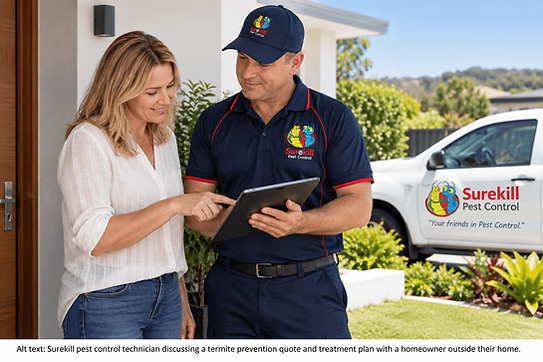
After assessing the property and discussing the termite prevention options considered suitable, Surekill will provide a quote for the recommended work.
The quote will reflect the termite management system being proposed, the areas requiring treatment, access requirements and the amount of work involved.
Treatment Duration
The time required will vary depending on the termite prevention system, size and construction of the property and access to treatment areas.
Some treatments may be completed within part of a day or a full day, while larger or more complex work may require more than one day or be carried out over several days. Surekill will discuss the expected timeframe when quoting and planning the work.
Booking the Treatment
Termite prevention work is scheduled according to the requirements of the individual property and the treatment being carried out.
When the treatment is booked, Surekill will advise you of the expected schedule and any preparation or access requirements that need to be completed before work begins.
Insurance, Licensing and Australian Standards
Surekill Pest Control is fully insured, and our pest management technicians are appropriately licensed and follow applicable EPA requirements and relevant Australian Standards when carrying out termite management work.
Payment Options
Payment can be made by EFT/bank transfer, cash, EFTPOS or credit card.
03
Preparing for Termite Prevention Treatment
Clear the Treatment Areas
Ensure the areas being treated are clear and accessible before your technician arrives. Depending on the treatment, this may include areas around the building perimeter, garage, subfloor or internal areas.
Move stored items, garden equipment, furniture or other obstructions where they prevent access to the required treatment areas.
Subfloor Access
If work is required beneath the building, make sure the subfloor entry and treatment areas are safely accessible. Remove stored items or other obstructions that may prevent the technician from reaching the areas requiring treatment.
Underground Services and Pipe Location
Where drilling, trenching or soil treatment is required, Surekill arranges for a professional pipe and service locator to check the relevant areas before the termite prevention work begins.
The locator identifies detectable underground services and marks their locations on the ground. These markings assist the technician when carrying out drilling, trenching and other treatment work.
Tell Us About Property Services
Please advise Surekill of any known underground services or property features that may affect the treatment, including irrigation systems, drainage, water tanks or other concealed services.
Treatment-Specific Preparation
Preparation requirements will vary according to the termite prevention treatment being carried out. Surekill will advise you before the appointment if any additional preparation is required for your property.

04
Treatment Day
Initial Walkthrough and Set-Up
When your Surekill technician arrives, they will conduct a walkthrough of the property to confirm the treatment areas and the work included in your termite prevention plan.
You can discuss any last-minute questions or concerns before work begins. The technician will then prepare the equipment and materials required for the treatment.
Property and Safety Checks
Before treatment begins, the technician will check the work areas and take appropriate precautions for the treatment being carried out.
Where drilling, trenching or soil treatment is required, any relevant markings made by the professional pipe and service locator will be checked before work proceeds.
The technician will also consider plants, pets and other areas around the property that may need to be protected or kept clear during treatment.
Carrying Out the Treatment
The technician will carry out the termite prevention treatment specified in your quote and treatment plan.
This may involve trenching and treating soil, drilling through concrete or paving to access soil beneath, replenishing a reticulation system, installing or servicing termite monitoring and baiting stations, or carrying out other termite management work appropriate to the property.
The detailed purpose of these different treatment methods is explained in Section 01 — Termite Prevention Assessment.
Drilling, Trenching and Treatment Areas
Where a chemical soil treatment requires direct access to the soil, trenching may be carried out around relevant foundation or perimeter areas.
Where concrete or paving prevents direct access, holes may be drilled so the soil beneath can be treated. Drill holes will be sealed after treatment.
Treatment areas will be managed carefully throughout the work, and larger or more complex treatments may continue over more than one day.
Quality Check and Final Review
Once the planned work has been completed, the technician will check the treatment areas and termite management components to confirm the work included in the treatment plan has been carried out.
Equipment and work areas will be checked before the treatment is finalised.
Post-Treatment Guidance and Questions
Before leaving, your technician will explain any instructions you need to follow after treatment. This may include temporary restrictions around treated areas and any future servicing or replenishment requirements for the termite management system.
You will also have the opportunity to ask questions about the treatment carried out and anything you need to know immediately following the work.
05
After the Termite Prevention Treatment
Follow the Post-Treatment Instructions
Your Surekill technician will explain any instructions that apply to the treatment carried out. Depending on the treatment, you may need to avoid disturbing treated soil or particular treatment areas for a period of time.
Follow the instructions provided for your property, as requirements can vary depending on the termite management system and products used.
Termite Management Notice
Where applicable, a termite management notice will be placed in the electrical meter box. This provides important information about the termite management work carried out at the property.
The notice should remain in place for future termite inspections, servicing and reference.
Treatment Documentation
Surekill will provide the relevant documentation for the termite prevention work completed. Keep this information with your property records, together with previous termite inspection reports and termite management documentation.
If You Find Suspected Termite Activity
If you notice termites or suspected termite activity after treatment, do not disturb the area or apply household insecticides.
Contact Surekill so the activity can be inspected and the appropriate next steps determined.

06
Ongoing Termite Risk Management
Your Termite Management Plan
Termite prevention is an ongoing process. The treatment or system installed at your property should form part of a long-term termite management plan that includes regular inspections, servicing where required and attention to conditions around the property that may increase termite risk.
Continue Regular Termite Inspections
Continue to have a comprehensive termite inspection carried out at least annually. Depending on the property, construction and surrounding conditions, more frequent inspections may be recommended.
Regular inspections are important even when a termite prevention system is in place, as termites may find concealed entry points or conditions around the property may change over time.
Service and Maintain the System
Some termite prevention systems require ongoing servicing or replenishment.
Reticulation systems may require future replenishment of the treated zone, while termite monitoring and baiting systems require scheduled inspections and servicing. Surekill will advise you of the ongoing requirements for the particular system at your property.
Changes Around the Property
Renovations, extensions, plumbing work, excavation, new paving, landscaping, garden beds and changes to ground levels can interfere with an existing termite management system or create new opportunities for concealed termite entry.
Where possible, contact Surekill before the work begins so we can advise whether the existing termite protection could be affected and whether additional termite management may be required.
Managing Conditions That Increase Termite Risk
Ongoing termite management also involves identifying and addressing conditions around the property that may increase the risk of termite activity or concealed termite entry.
Moisture problems, leaking plumbing, poor drainage, timber stored against or beneath the building, and areas that prevent clear inspection of the building perimeter should be addressed where possible.
Your Surekill technician may identify and report conditions that could increase termite risk during future termite inspections and recommend practical steps to help reduce those risks.
Keep Your Termite Records
Retain your termite inspection reports, treatment documentation and information about the termite management system installed at the property.
These records provide useful information for future inspections, servicing and any termite management work that may be required.