
What to Expect During a Rodent Treatment
Rodent activity can occur in homes, commercial premises and other buildings where rats or mice can access food, water and shelter. Signs may include droppings, gnawing, noises in roof or wall cavities, disturbed food or evidence of regular rodent movement. A professional inspection helps determine where rodents are active and the most appropriate approach to managing the problem.
A Surekill Pest Control technician will assess the property and discuss the rodent activity you have noticed. Depending on the circumstances, rodent management may include baiting, secure bait stations, trapping, monitoring and recommendations to help reduce food, shelter and entry points.
Where rodenticides are required, they are selected and used in accordance with current product directions and regulatory requirements, with careful consideration given to children, pets, wildlife and other non-target animals.
This guide explains how to prepare for your rodent treatment, what happens during the service and the steps you can take afterwards to help reduce the risk of further rodent activity.
01
Booking Information
Booking and Treatment Time
Rodent treatments generally take approximately one hour, although the time required can vary depending on the size of the property, the areas requiring inspection and the level of rodent activity.
Appointments are scheduled within an arrival window. For example, if your booking window is between 10 am and 12 noon and the technician arrives at 12 noon, the treatment time begins from their arrival.
Access Requirements
Your technician may need access to areas such as the roof void, subfloor, garage, sheds, storage areas or other locations where rodent activity has been reported. Please ensure these areas can be safely accessed.
Weather Conditions
Most rodent treatment work is carried out within buildings or protected areas, so normal weather conditions generally do not affect the service. Where external areas need to be inspected or treated, severe weather may affect some parts of the service.
Free Service Period
Rodent treatment includes a three-month free service period. If you continue to experience rodent activity during this period, contact Surekill Pest Control so we can assess the situation and determine whether further treatment is required.
Licensed and Insured Technicians
Surekill Pest Control technicians are appropriately licensed and insured and carry out rodent treatments in accordance with applicable product directions and regulatory requirements.
Payment Options
Payment can be made by EFT/bank transfer, cash, EFTPOS or credit card. Payment is required before treatment commences.

02
How To Prepare for Rodent Treatment
Provide Access to Activity Areas
Ensure the technician can safely access areas where rodent activity has been noticed. This may include the roof void, subfloor, garage, sheds, storage areas, cupboards or other parts of the property.
Tell Us What You Have Noticed
Let your technician know where you have heard noises or noticed droppings, gnawing, damaged food packaging, unusual odours or rodent sightings. These signs can help identify areas of activity and possible travel routes.
Food and Waste
Store food, including pet food, in secure containers where practical. Clean up accessible food scraps and ensure rubbish is contained. Reducing available food and shelter is an important part of managing rodent activity.
Children and Pets
Tell your technician if children or pets live at or regularly visit the property. This information will be considered when determining suitable treatment methods and locations for any bait stations or traps.
Do Not Disturb Rodent Activity
You do not need to move existing bait stations, traps or suspected nesting materials before the technician arrives. Where possible, leave signs of rodent activity undisturbed so the technician can assess their location and determine how rodents are moving through the property.

03
Before Treatment
Discuss the Rodent Activity
Your Surekill technician will discuss the activity you have noticed, including where rodents have been seen or heard and any signs such as droppings, gnawing or damaged food packaging.
Inspect the Property
The technician will inspect relevant areas of the property to determine where rodents are active and how they may be moving through the building. Signs such as droppings, rub marks, gnawing, nesting material, tracks and established travel routes can help identify areas requiring attention.
Check Roof, Subfloor and Other Harbourage Areas
Where accessible and relevant, the inspection may include roof voids, subfloors, wall-access areas, garages, sheds, storage areas and external parts of the property where rodents may be nesting or travelling.
Identify Food, Water and Shelter
Your technician will look for conditions that may be supporting rodent activity, including accessible food, water, rubbish, stored materials and potential nesting or harbourage areas.
Assess Entry Points
Potential rodent entry points may also be identified. Where appropriate, your technician can recommend proofing or other changes that may help reduce future rodent entry. Durable rodent-proofing is an important component of longer-term management.
Determine the Treatment Approach
Once the inspection is complete, your technician will determine the appropriate treatment and monitoring approach for the property. This may include baiting, secure bait stations, trapping or a combination of methods depending on the circumstances.

04
Rodent Treatment Process
Treatment Based on Rodent Activity
Your Surekill technician will select the treatment methods according to the type and location of rodent activity identified during the inspection. Rodent management may involve baiting, secure bait stations, trapping, monitoring or a combination of methods.
Strategic Bait Placement
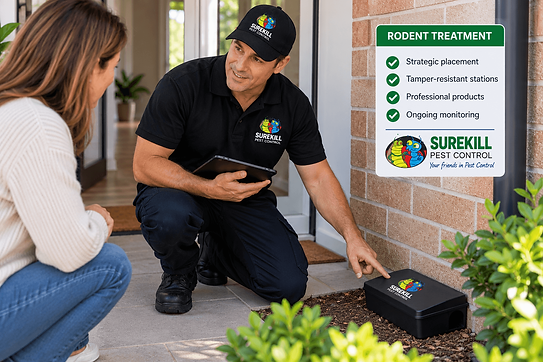
Where rodenticides are appropriate, baits are positioned in areas associated with rodent activity, such as established travel routes, harbourage areas or other suitable locations. Placement is determined by the technician rather than simply distributing bait throughout the property.
Secure Bait Stations
Where required, rodent bait is placed within secure bait stations to help restrict access by children, pets, wildlife and other non-target animals. Bait stations are positioned so they can be inspected and monitored as required.
Trapping and Other Control Methods
Trapping may be used where it is more appropriate for the property or particular rodent problem. The location of traps is based on evidence of rodent activity and established travel routes.
Current Rodenticide Requirements
Where rodenticides are used, your technician will select an appropriate registered product and apply it in accordance with the current product label, regulatory requirements and any applicable restrictions.
Recording and Monitoring
The location of rodent bait stations and other control devices may be recorded to allow them to be checked during follow-up services. Monitoring helps determine whether rodent activity is continuing and whether the management approach needs to be adjusted.
05
After Your Rodent Treatment
Leave Bait Stations and Traps Undisturbed
Do not move, open or interfere with rodent bait stations or traps after treatment. Their locations have been selected according to the rodent activity identified during the inspection.
Monitor Rodent Activity
Rodent activity may not stop immediately after treatment. Continue to monitor for signs such as noises, droppings, sightings or evidence of feeding. If rodent activity continues during the three-month free service period, contact Surekill Pest Control so we can assess the situation and determine whether further treatment is required.
Dead Rodents
Rodents may die in inaccessible areas such as roof voids or wall cavities, which can sometimes result in a temporary unpleasant odour. Where a dead rodent can be safely accessed, it should be handled carefully, removed and disposed of appropriately. Fleas and other parasites may leave the animal after it dies.
Odour Management
If a rodent dies in an inaccessible location, an odour may remain while the carcass naturally breaks down. Surekill Pest Control can provide an odour-control bag where appropriate to help manage unpleasant smells.
Follow-Up and Monitoring
Rodent bait stations and other control devices may require checking and monitoring depending on the treatment program. Rodent activity, bait consumption and other signs can help determine whether further treatment or adjustments are required.
Ongoing Risk Management
Where a property has recurring rodent pressure, ongoing monitoring and preventative measures may be recommended as part of a Risk Management Program. This can include scheduled inspections, monitoring of bait stations and recommendations to address conditions that may contribute to future rodent activity.
06
How to Help Keep Rodents Away
Reduce Food Sources
Store food, including pet food and animal feed, in secure containers. Clean up food spills and crumbs promptly and avoid leaving food accessible overnight. Reducing available food makes the property less attractive to rats and mice.
Manage Rubbish and Waste
Keep rubbish in bins with secure, well-fitting lids and regularly remove accumulated waste. Around commercial properties, maintain clean waste-storage and bin areas.
Reduce Shelter and Harbourage
Remove unnecessary clutter, rubbish and stored materials that may provide rodents with protected nesting or harbourage areas. Keep vegetation and overgrown areas around buildings maintained where practical.
Address Water Sources
Repair leaking pipes, taps and other plumbing problems and reduce unnecessary standing water around the property. Food, water and shelter can all contribute to conditions that support rodent activity.
Seal Potential Entry Points
Inspect the building for gaps, holes and other potential entry points around doors, walls, roofs, service penetrations and other parts of the structure. Appropriate rodent-proofing should use durable materials that rodents cannot readily gnaw through.
Continue Monitoring
Watch for new droppings, gnawing, noises, sightings or other signs of rodent activity. Early identification can help prevent a developing rodent problem from becoming more established.
Ongoing Rodent Risk Management
Properties with recurring rodent pressure may benefit from an ongoing Risk Management Program incorporating scheduled inspections, monitoring and appropriate control measures. This is particularly relevant for commercial premises and properties where food, waste, storage or surrounding environmental conditions create an ongoing rodent risk.
